


Kintsugi: A Shimmering Symphony of Metamorphosis
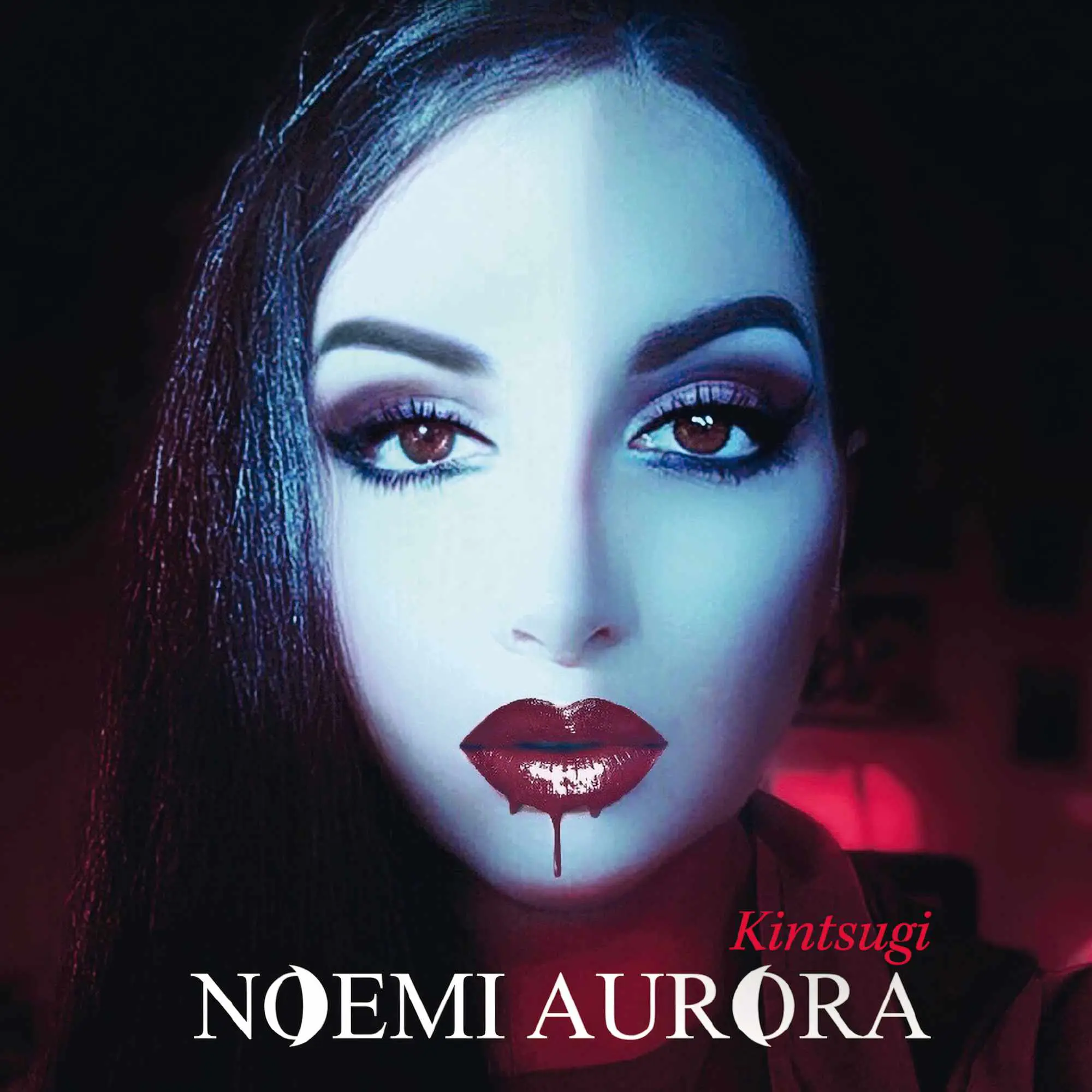
Album facts
Release Date: February, 7th 2025
Label: Spleen+ / Alfa Matrix
Tags: Dark Wave, Synth Pop
Discogs: Noemi Aurora – Kintsugi
Partially sounds like: Dead Can Dance, Siouxsie, Kate Bush, Ladytron, Front 242, Massive Attack, Cocteau Twins
Final score: 4.67 stars
There are albums you listen to. There are albums you admire. And then, very rarely, there are albums that seem to recognize something inside you before you even have found the words for it yourself. « Kintsugi » belongs to that third category. Noemi Aurora's first solo album does not feel like a conventional debut. It feels more like the opening of a sealed chamber, a place where electronic pulses, nocturnal poetry, sensuality, vulnerability, darkness and an almost extraterrestrial sense of beauty have been quietly accumulating for years.
The title could hardly be more appropriate. Kintsugi is the Japanese art of repairing broken objects while deliberately leaving their fractures visible. Noemi Aurora takes that philosophy and turns it into sound. The cracks are not concealed here. They become circuitry. They become veins. They become golden electrical paths running through every song.
What makes « Kintsugi » particularly fascinating is that it never treats darkness as merely something negative. Darkness becomes a habitat. A laboratory. Sometimes even a playground. This is music for people who have discovered that surviving something does not necessarily mean returning to who they were before it happened. Sometimes survival means becoming someone else. And « Kintsugi » is an album about that metamorphosis.
The Sound Of The Album
Noemi Aurora creates a strange territory somewhere between darkwave, electro, industrial electronics, post-punk, synth pop and something far more difficult to categorize. But genre labels only describe the walls of the room. They don't describe what happens inside it.
Her production has a particular nocturnal magnetism: synthetic textures appear cold at first, then gradually reveal warmth underneath. Percussion can feel mechanical while the voice remains intensely human. Melodies sometimes seem almost fragile before suddenly acquiring an enormous emotional gravity. And then there is her voice. It doesn't simply sit on top of the electronics. It moves through them. Sometimes seductive, sometimes wounded, sometimes commanding, sometimes almost spectral, Noemi's voice becomes another instrument, a living thread connecting the human body to the album's strange electronic universe. That is perhaps the album's greatest achievement : technology never manages to erase humanity. Instead, the machines illuminate it.
Keep Your Tears To Water My Roots
The album begins not with an explosion, but with an invocation. « Keep Your Tears To Water My Roots » immediately establishes one of Kintsugi's central ideas: pain doesn't necessarily have to destroy us. Sometimes it becomes nourishment. The imagery of erosion, falling leaves, roots, water and the body creates an almost elemental atmosphere. Nature and emotion become impossible to separate.
It feels like watching someone standing inside the ruins of their former self and realizing that something is still growing there. The song is delicate without being weak. It is emotional photosynthesis — sorrow entering the darkness and somehow producing light. The song introduces the album's philosophy without explaining it. You simply feel it.
Blood As Lipstick
 This is one of the album's defining statements. The title itself is magnificent: turning blood, traditionally a symbol of injury — into lipstick, traditionally a symbol of beauty, seduction and self-expression. That contradiction is essentially « Kintsugi » in miniature. This is not a song about pretending that wounds don't exist. It is about wearing survival as decoration.
The song's attitude is fierce: pain becomes something confronted rather than hidden. The protagonist doesn't ask the darkness for permission to exist. She walks directly into it. There is something almost vampiric about the imagery, but beneath the sensuality lies a much more human message : I have been hurt, but you will not decide what that hurt turns me into. It transforms vulnerability into defiance without sacrificing emotional depth.
Too Late To Die
One of the most cinematic pieces on the album. The collision between Italian verses and the English title creates an especially interesting sensation : something intensely intimate suddenly becomes universal. The song lives somewhere between insomnia, neon, gravity and dreams. Its central paradox is wonderful: it is “too late to die” because something inside the protagonist has already decided to live. The imagery of electric dreams, magnetic fields, falling and an immortal heartbeat gives the song an almost urban-supernatural quality. It feels like running through a sleeping city at 3 a.m. with the terrifying realization that you are still alive and that perhaps you have never felt more alive. It turns survival into exhilaration.
Shining
« Shining » is the album's neon heartbeat. The melody of this song reminds me so much of « Fade To Grey » by Visage. It is immediately accessible, but its apparent simplicity hides a darker architecture. Mirrors, roses, wounds, darkness, stars and the destruction of the sun all coexist inside a song that manages to be danceable without becoming emotionally lightweight. That is difficult to accomplish. The title sounds optimistic. The song isn't entirely optimistic. And that tension is exactly what makes it fascinating.
This is luminoir, a kind of darkness that doesn't extinguish light but makes the light more visible. « Shining » doesn't say that everything is beautiful. It says that beauty can continue to exist even when something has cracked. This song is probably the clearest sonic manifesto of the entire album.
Malicious Logic
Here the album becomes more confrontational. « Malicious Logic » feels like an interrogation of guilt, memory, desire and the strange ways people rationalize what they have done. The song's electronic pulse gives those questions a physical dimension. You don't merely hear the repetition. You feel trapped inside it. The phrase “malicious logic” itself suggests a disturbing mechanism : the human mind constructing perfectly convincing explanations for things that perhaps should never have happened. There is something almost cybernetic about the song's psychology. A conscience with a synthesizer attached to it. And that is one of its greatest strengths.
Animal
« Animal » is instinct returning to the body. After the psychological tension of « Malicious Logic », this track feels more physical, more primal. The message is essentially : stop overthinking for a moment. Move. Breathe. Fight. Try again. The phrase “CTRL+ALT+TRY AGAIN” is particularly effective because it translates emotional rebirth into computer language.
A restart. A reboot. Another attempt. But underneath the technological imagery is something profoundly primitive : the refusal to surrender. This is survival code disguised as a dance track. It reconnects the album's cerebral electronic world with something instinctive and bodily.
Dal Giardino Di Algos
One of the album's most mysterious pieces — and, for me, one of its most fascinating. The Italian language changes the emotional temperature immediately. There is something almost ritualistic about « Dal Giardino Di Algos ». The “garden” isn't necessarily a peaceful place. It feels like a forbidden landscape where beauty and danger grow from the same soil.
The song seems to descend rather than simply progress. It is sensual, feverish and strangely mythological. And the Italian vocals make it feel even more intimate, as though the listener has accidentally overheard a private incantation. This is not simply a song. It feels like a ritualogram, an emotional ritual written in sound. It gives « Kintsugi » an almost occult dimension without becoming theatrical for the sake of it.
Bring Me The Lake
This is where beauty becomes dangerous. The lake is simultaneously attractive and threatening. Nature isn't presented as a comforting refuge; it possesses secrets, darkness and destructive power. That contradiction is extraordinary. The song asks us to move closer to something even though we know it may hurt us. And isn't that one of the great contradictions of human desire?
We frequently approach the things we know can consume us. « Bring Me The Lake » feels like standing at the edge of an unknown body of water at night and realizing that the fear is precisely what makes you want to enter. The song creates one of the album's most vivid cinematic environments.
The Alchemist
If « Kintsugi » is about transforming damage into beauty, « The Alchemist » is practically its philosophical centerpiece, the album's clearest statement of its central philosophy. The song rejects the conventional savior narrative. There is no need for a hero. No need for someone else to arrive and repair everything. Instead, transformation becomes an act of personal chemistry. The scars remain. The ruins remain. But something new can be created from them. The imagery of poison, crowns, ruins, rain, rivers and diamonds makes the song feel almost like a gothic fairy tale for adults.
And the final concept is beautiful : someone taking broken dreams and transforming them into something precious. That is Kintsugi. Not erasing the fracture. Changing what the fracture means.
Stranger To Myself
 This is one of the album's most psychologically intimate moments. The song confronts that frightening experience of no longer recognizing yourself — and then discovering that perhaps the person you were hiding from was yourself all along. The emotional movement is important. It doesn't simply remain in alienation. It moves toward recognition. Toward reclaiming the self, transforming identity crisis into self-recovery. There is something incredibly human about that. The title begins as a confession. By the end, it feels almost like a diagnosis that has been overturned. I am no longer a stranger to myself. That makes the song feel like one of the album's emotional turning points.
Untouchable
Dreamlike, sensual and slightly dangerous. « Untouchable » feels as though reality has become unstable. There are shadows, spirits, magic doors, white horses, alternate dimensions and the idea of existing somewhere outside ordinary rules. The title is particularly clever because the song itself is full of intimacy. The narrator wants closeness while simultaneously remaining unreachable. That contradiction gives the song its erotic tension. It is desire with an escape route built into it. A love song for people who live halfway between reality and fantasy.
Yugen
The perfect closing statement. « Yugen » is a Japanese aesthetic concept associated with profound, mysterious beauty — something that cannot be completely explained, only felt. That makes the title extraordinarily appropriate for the end of « Kintsugi ». After all the blood, wounds, desire, darkness, movement and transformation, the album doesn't conclude with a gigantic explosion. It dissolves. The song reaches toward radiance and something almost divine, but never completely explains what that radiance is. And perhaps that is exactly the point.
Some experiences lose their magic when you explain them. Some things should remain partly hidden. « Yugen » leaves the door open. And when the final echoes disappear, « Kintsugi » doesn't feel finished. It feels unfinished in the most beautiful possible way. It doesn't close the story. It leaves the listener suspended inside it.
In Conclusion
« Kintsugi » is not an album that asks to be consumed quickly. It asks to be entered. Its songs behave less like isolated tracks and more like rooms in the same strange house.
Some are neon-lit. Some are flooded. Some contain mirrors. Some contain wounds. Some contain monsters. Some contain gardens. And somewhere inside all of them is the same question : what if being broken isn't the opposite of being beautiful? Noemi Aurora's answer is not delivered as a slogan. It is delivered through rhythm, circuitry, poetry, sensuality, distortion, silence and voice.
That is why « Kintsugi » feels much larger than a debut album. It feels like an autobiography written in electricity. A scar-symphony. A nocturnal metamorphosis. A gold-threaded nervous system. And perhaps most importantly, it is an album that refuses to apologise for its darkness. It doesn't ask darkness to become light. It teaches darkness how to glow.
This is the very first time I give such a high rating to an album. Musically perfect, I can tell that Noemi Aurora spent an insane amount of time on the composition of the melodies. Lyrically inspired, the verses carry such deep meaning and even have several levels of understanding. And on top of all that, there’s the voice of Noemi Aurora.
How in the world is it possible to have such a pure and addictive voice which carries so much fragility and raw power at the same time? I strongly recommend this album with all my heart and soul ! I won’t go in details, but simply know that it has done touched me on a very deep level, brought me strength, comfort, courage,… much more than any other album I have ever listened to. This is essential listening for anyone who believes that music should do more than entertain, it should alter the temperature of the soul.
Find the exclusive interview with Noemi Aurora in our Print-Magazine issue #03.
