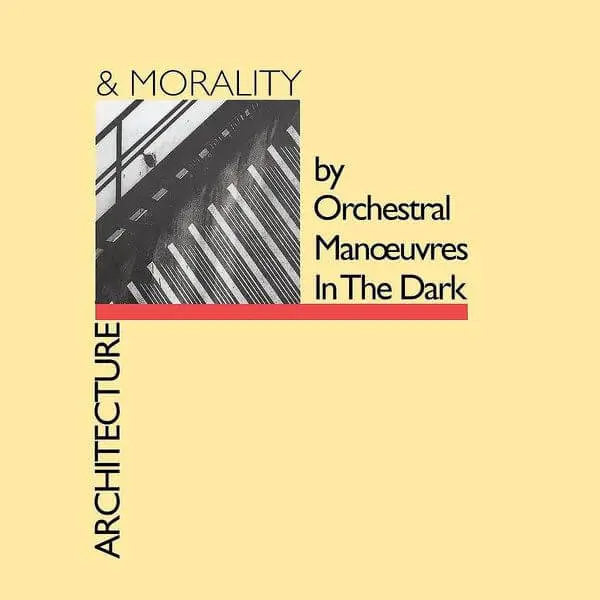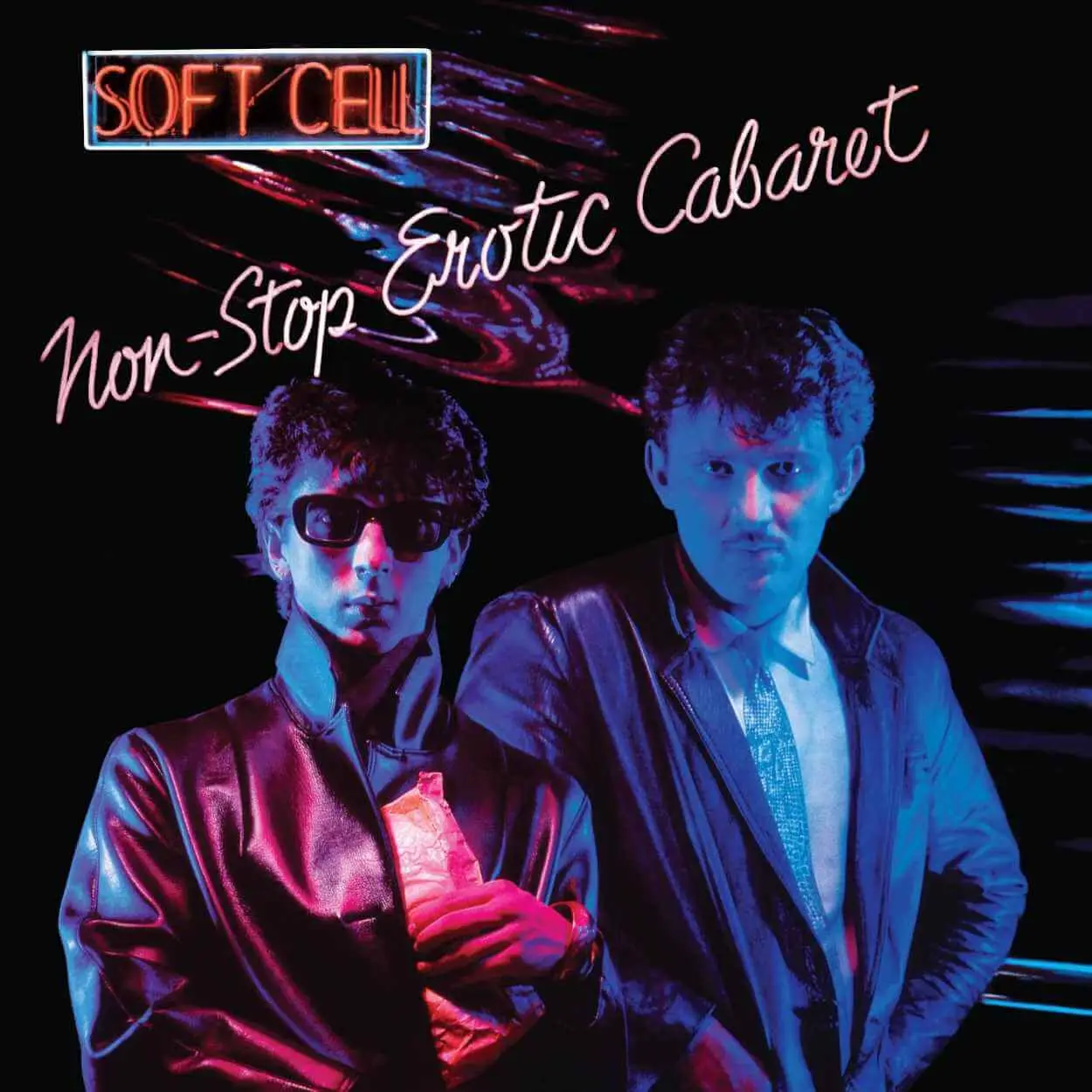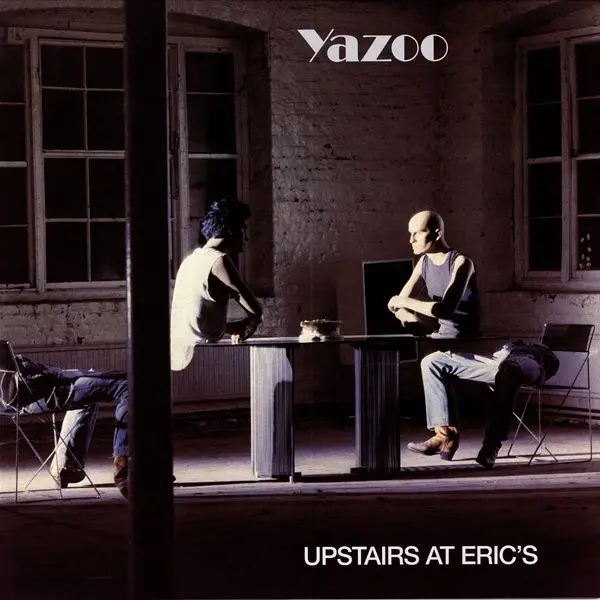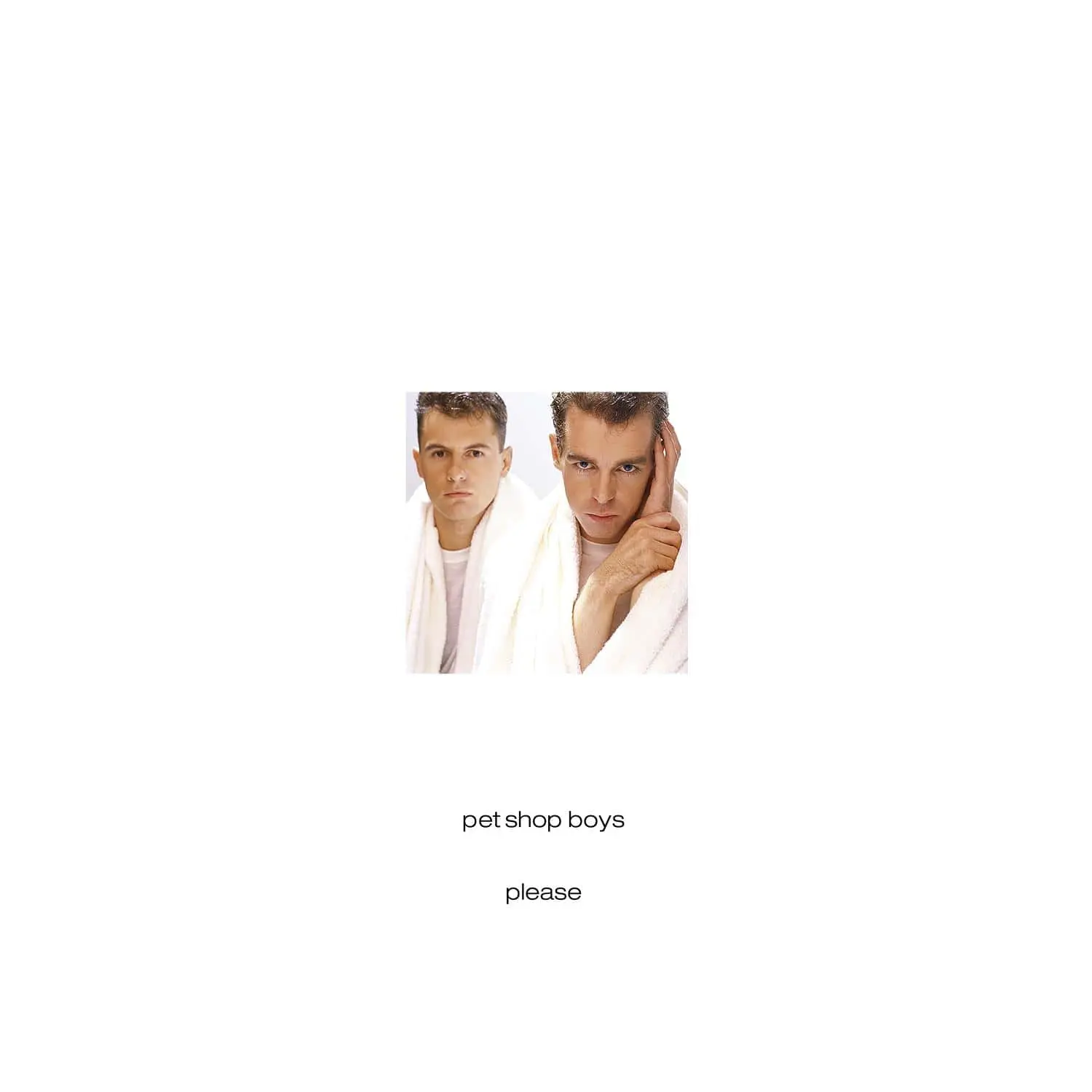
I’ve been running Electrozombies since 2010, which means I’ve spent about a third of my life discussing with people whether a particular song is synth pop or not. Probably even longer than that. Sometimes in comments sections. Sometimes in the afternoon sun at the Amphi Festival Beach Club. And quite often in submissions via SubmitHub.
So this is my attempt to set all this down properly for once. Where synth pop came from, what it actually is, who created it, how it has evolved, and why a genre that was politely ignored in the late 90s and early 2000s simply refuses to stay in its grave. Grab a coffee. This is going to take a while.
To be honest, I’ve been working on this article for years now. The topic is surprisingly complex, but I really wanted to avoid letting it spiral into a dry doctoral thesis. However, seeing the recent surge of songs hitting my SubmitHub inbox that are falsely labeled as synth pop has made me realize just how crucial this piece of matter has become. It’s more than time to finally get this out there.
The definition of the music genre synth pop
The definition seems obvious. It’s pop music dominated by synthesisers. That’s it, lesson’s over, everyone go home. Except it’s not quite that simple, because if it were, half the charts of the last forty years would fall into that category and the term would no longer have any meaning.
What distinguishes synth pop from "pop with a synthesiser in it" is the emotional and lyrical stance. Synth pop tends towards serious and melancholic themes! The pain of separation, tragic love, depression, alienation, political powerlessness, weariness of life, the quiet fear of being a small person in a vast system. The machines are deliberately cold. The songs are warm at their core, and it is precisely this tension that is the crux of the matter.
Synth pop is not the same as commercial pop produced using synthesisers. I discuss this in detail in the chapter 'Why commercial pop with synthesizers isn't synth pop by definition', as this is the most common misunderstanding I come across.
Synth pop, synthpop or synth-pop?
All three terms are in common use, and none of them is incorrect. Even music journalists in the early 1980s could not agree, and the genre was alternately categorised as ‘Futurist’, ‘New Musick’, ‘Electropop’ and ‘Technopop’ before ‘Synthpop’ finally became the accepted term.
At Electrozombies, I use both terms, and there’s a perfectly logical reason for this, even if it looks like carelessness. In the legal notice, we’re the ‘International Synthpop Magazine’, and our motto has always been ‘In Synthpop We Trust’, written as one word, because it reads better as a brand name, claim or tagline and because you can’t put a space in a battle cry! In normal copy texts, however, I write ‘Synth Pop’ as two words. Whichever of the three spellings you’re looking for, you’re looking for the same music.
What is the cultural origin of synth pop?
Synth pop emerged as a distinct movement in the United Kingdom between around 1978 and 1981, and grew out of punk rather than being a reaction against it. This surprises many people. Yet punk’s true legacy was not the guitars, but the freedom it afforded. You don’t need a degree from a music college, a record deal or three years’ tuition to record an album. When affordable monosynths came onto the market, a generation that had just been told, ‘anyone can do this’, discovered that one person plus a keyboard could achieve what had previously required four people and a van.
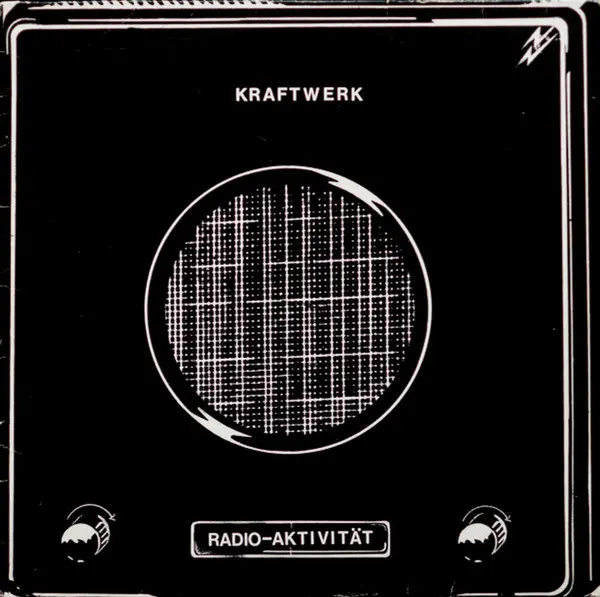
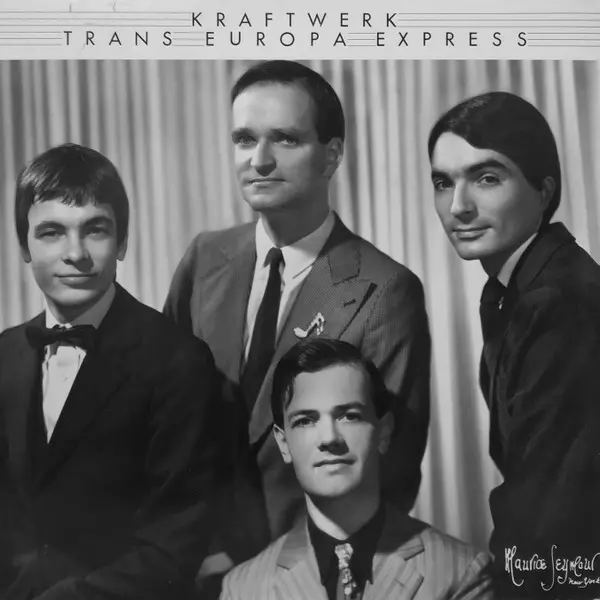
The other half of the equation was German. With "Autobahn" (1974), "Trans-Europe Express" (1977) and "The Man-Machine" (1978), Kraftwerk had shown that electronic music could be melodic, structured, emotionally accessible and unmistakably pop. Every British teenager who went on to form a synth band has a Kraftwerk story. It’s not just every British teenager, my own musical journey begins here too. Add to that Tangerine Dream, Neu! and the entire Krautrock scene, and the blueprint was complete.
Then there is the social climate, which played a greater role than is usually acknowledged. Britain on the cusp of the 1980s was characterised by mass unemployment, industrial decline, power cuts that were still fresh in people’s minds, and a very real fear of nuclear war. Songs such as ‘Enola Gay’ by OMD or ‘Dancing With Tears in My Eyes’ by Ultravox are not stylistic exercises, but the sound of a generation that seriously expected the sirens to wail. The accompanying futuristic aesthetic, very much in the style of J. G. Ballard, *Metropolis* and chrome, was less an escape from reality than the only way to look to the future.
The genre quickly established itself in Britain and found a loyal following in Germany, Sweden and Japan, which is largely why the scene still exists in precisely these places today.
Who invented synth pop?
Short answer: nobody invented synth pop. Genres are not invented (usually), they are noticed after the fact by journalists who need a headline. What we can do is name the records that arrived before anyone had a word for it.
It looks like that my pal Javier from "Periodic Table of Synthpop" knows the answer, or isn't it? Perhaps not entirely, but his periodic table already features many fundamental bands and vividly illustrates a selection of synth pop’s greatest pioneers.
The Famous Periodic Table of Synthpop
Hover over or tap an element to see the band, its genre and the year it was founded.
Table and band selection by Javier, Periodic Table of Synthpop. Used with kind permission. A personal selection of 118 favourite acts, not an objective canon.
The single most under credited figure here is Giorgio Moroder. 'I Feel Love' by Donna Summer (1977) is an entirely electronic pop record with a sequenced bassline that rewired what people thought machines could do emotionally. Moroder then produced 'N°1 in Heaven' by Sparks (1979), which is arguably the first true synth pop album by a pop band, and one whose influence on Depeche Mode and Pet Shop Boys is impossible to miss.
In Japan, Yellow Magic Orchestra released 'Solid State Survivor' in 1979 (their self-titled debut came in 1978), and it remains one of the most complete early statements of the form. In Britain the same year brought 'Reproduction' by The Human League and 'Replicas' by Tubeway Army, and 'Are Friends Electric?' went to number one in the UK in June 1979. A genuinely strange, seven-minute half-spoken song about androids, sitting at the top of the chart. Gary Numan followed it with 'Cars' three months later. The door was open.
And then there is the record that quietly mattered most: 'Warm Leatherette / T.V.O.D.' by The Normal (1978). One man, Daniel Miller, one synthesizer, one drum machine, released on a label he invented to put out his own single. That label was Mute. Three years later Mute signed Depeche Mode. Do the maths.
So, no inventor, but a handful of people in Munich, Tokyo, Sheffield and a London bedroom independently working out the same thing at the same time. Also worth naming: Telex from Belgium, Suicide from New York, and DAF from Düsseldorf, who took it somewhere considerably more sweaty.
What are the typical characteristics of synth pop?
- Electronic instrumentation: synthesizers, drum machines and sequencers as the primary voice, not as decoration on top of a rock band.
- Melodic focus: for all the talk of machines, synth pop lives or dies on songwriting. A great hook played on a cheap monosynth beats a bad hook played on a wall of modular any day of the week.
- Minor keys and melancholy: the genre has a well-documented allergy to major-key optimism. Even the dance floor material tends to be sad underneath. If things get cheerful, we drift into the electro pop realm.
- Lyrical seriousness: technology, politics, faith, power, desire, BDSM, alienation, mortality. Depeche Mode built a career out of subjects that pop music was supposed to avoid.
- Vocals with distance: clear, often androgynous, frequently a detached baritone. There is a direct line from Gary Numan through Dave Gahan to Nicklas Stenemo of Kite.
- Mechanical rhythm: the beat does not swing, and that is deliberate. The machine keeps perfect time while the human on top falls apart. That contrast is the genre.
What is the usual BPM of synth pop?
Most synth pop sits somewhere between 110 and 130 bpm, but the range is genuinely wide. At the slow end you get something like 'Walking In My Shoes' by Depeche Mode at roughly 92 bpm. At the fast end, OMD's 'Enola Gay' runs at about 143 bpm and 'Electricity' pushes towards 160, though that one exists in several versions at slightly different tempos, so treat that figure as a guideline rather than an absolute truth.
Tempo is not a defining characteristic of the genre. If someone tells you a track "isn't synth pop because the bpm is wrong", they are making it up.
Which artists influenced synth pop?
- Kraftwerk: the foundation stone. Melody, repetition, humour, and the idea that machines could be characters rather than tools.
- Giorgio Moroder: proved a fully sequenced record could be the most physical thing on the dance floor.
- David Bowie: the Berlin trilogy, and particularly 'Low', gave synth textures emotional credibility in a rock context.
- Brian Eno: as producer and theorist, made "the studio as instrument" a normal idea.
- Roxy Music: art-school glamour, unconventional structures, and the visual side of the whole thing.
- Suicide: the confrontational, minimal, genuinely frightening end of what a keyboard and a drum machine could do.
- Punk and post-punk: not sonically, but as the attitude that made the whole thing possible.
All I can say is that I personally only knew about Kraftwerk and, to some extent, Giorgio Moroder in relation to this genre. I only learned about Brian Eno, Roxy Music, and Suicide much later through research.
The closest subgenres and relatives of synth pop in an orbital view
The centre
Synth Pop
The heart of it all. Pop songwriting built on synthesizers, where the machine carries the melody and the hook. Everything else on this map is a sibling, an ancestor or a descendant of it.
- Depeche Mode
- The Human League
- OMD
- Yazoo
Closest siblings
Electro Pop
Broadly the more accessible, dance-oriented, chart-friendly wing. Catchier, less layered, easier to love on first listen.
Darkwave
The shadowed wing of the synth family, melancholy and atmosphere valued over hooks, where cold synths meet post-punk gloom.
- Clan Of Xymox
- The Cure
- Diary Of Dreams
- She Past Away
- Lebanon Hanover
New Romantic
Less a sound than a scene, born in London clubs around 1979 to 1981 and defined by theatrical styling as much as by music.
Direct offshoots and ancestors
New Wave
The broad church synth pop grew out of in the early 80s, defined by electronic instruments, unconventional structures and a taste for experiment.
- Talking Heads
- Talk Talk
- Tears For Fears
- Early OMD
Minimal & Cold Wave
Sparse, lo-fi, frequently self-released on cassette, and hugely influential on everything currently happening in the underground.
- Absolute Body Control
- Trisomie 21
- Kas Product
- Oppenheimer Analysis
- Deux
Italo Disco
The glossy, romantic Euro-disco of the early 80s, built on cheap synths and drum machines, and a direct ancestor of a good half of synth pop's DNA.
- Ken Laszlo
- Gazebo
- Den Harrow
- Valerie Dore
Future Pop
Mid to late 90s, synth pop songwriting welded to trance production. I have always described it as Ibiza Gothic, and I stand by that.
- Apoptygma Berzerk
- VNV Nation
- Covenant
- Code 64
- Colony 5
- Frozen Plasma
Synthwave & Retrowave
Emerged in the late 2000s, drawing on 80s soundtrack aesthetics rather than 80s bands. Heavily indebted to sci-fi cinema and to 'Escape From Television' by Jan Hammer.
- Com Truise
- Gunship
- Nina
- Scandroid
Electroclash
The early 2000s collision of synth pop, punk attitude and club culture. Loud in the press and short-lived (with expectations) in practice.
- Ladytron
- Le Tigre
- Chicks On Speed
- Crystal Castles
- Client
- Robots In Disguise
- Sexy Sushi
- Fairlight Children
Goth Pop
Goth sensibility poured into proper pop songs, hooks and melody up front, the darkness carried by mood and styling rather than by distortion or guitars. A young, largely modern and often female-fronted wave.
- Agnis
- Madeline Goldstein
- Apnoie
- Kat Von D
Harder or more distant relatives
EBM
Harder, more percussive, shouted rather than sung.
- Front 242
- Nitzer Ebb
- DAF
- Front Line Assembly
Industrial Pop
Mechanical weight plus genuine hooks. For the full picture, read our article 'Everything you need to know about Industrial Pop'.
Aggrotech & Dark Electro
EBM turned harsher and blacker, distorted vocals, horror aesthetics, built for the club's darkest hour.
- Suicide Commando
- Hocico
- Grendel
- Combichrist
Darksynth
Synthwave's malevolent sibling, trading neon nostalgia for John Carpenter menace and horror-film dread.
- Perturbator
- Carpenter Brut
- GosT
- Dance With The Dead
Post-Punk
The darker, angular parent alongside new wave, guitars and basslines up front but already reaching for synths and cold detachment.
- Joy Division
- Siouxsie And The Banshees
- Public Image Ltd
- Agent Side Grinder
One correction to a claim you will see repeated online: dream pop is not a synth pop subgenre. Cocteau Twins are a guitar band with an effects rack, and Air are French downtempo. Lovely music, wrong family tree.
How about dark wave as a subgenre of synth pop?
Dark wave is a relative, not a child. It emerged in the 80s as a darker, more atmospheric and considerably more introspective alternative, and while it shares synth pop's electronic vocabulary, it is not obliged to use it. Plenty of dark wave is guitar-driven.
Where synth pop keeps one hand on the pop hook, dark wave is happy to let a track drift for six minutes in search of a mood. Both were born in the same decade, both are preoccupied with melancholy, and the overlap in the middle is enormous. Clan of Xymox, The Cure in their imperial phase, Xmal Deutschland and, more recently, She Past Away and Twin Tribes all live in that overlap.
Depeche Mode get filed under both, which annoys purists in both camps and delights me enormously!
Synth pop vs electro pop
You will often read that the difference is analogue versus digital. That is a tidy theory and it falls apart immediately. By 1983 everyone had a DX7, and by 1985 Depeche Mode were working primarily with samplers. The technology stopped separating these genres four decades ago.
The real difference is posture. Synth pop leads with mood, texture and lyrical weight, and lets the hook arrive on its own terms. Electro pop leads with the hook and lets the mood follow. Synth pop wants you to feel something complicated. Electro pop wants your feet moving by the second chorus, and there is nothing whatsoever wrong with that.
Yazoo are the perfect illustration of how blurry this is. Vince Clarke's arrangements are pure synth pop, Alison Moyet's voice is pure soul, and the result belongs to both categories simultaneously. The boundary is a gradient, not a wall. You can hear that very clearly in your classic "Don't Go".
Fifty years of synth pop in a rush
The pioneers
Kraftwerk codified the vocabulary with Autobahn, Tangerine Dream stretched ambient horizons, and Giorgio Moroder built the pulse with Donna Summer. Simultaneously, Brian Eno, Roxy Music, and Ultravox smuggled synthesizers into art rock, while early Japanese electronic explorers like Isao Tomita and Yellow Magic Orchestra's precursors laid the crucial groundwork for machine-driven pop.
The breakthrough
The Normal, YMO, Sparks, Tubeway Army and The Human League establish the form. By late 1981 it is the dominant sound in Britain: The Human League's "Don't You Want Me" is the Christmas number one and the best-selling UK single of the year, and Soft Cell's "Tainted Love" becomes a global phenomenon that famously camped out in the American charts for the better part of a year.
The imperial phase
This is where MTV changes the maths. The new channel needs video content, and British synth bands are the only ones treating the format seriously. The result is the so-called Second British Invasion, for a stretch of 1983, a substantial share of the American Top 40 is British and electronic. Fashion, artwork and video become part of the package. Anton Corbijn's grain, Peter Saville's austerity, and haircuts that required structural engineering.
The fall
Three things happened simultaneously. Synthesizers became so ubiquitous that they completely lost their significance or were no longer considered a revolutionary sound. House and techno emerged and conquered electronic dance floors. And rock music made a powerful comeback. First with stadium bands, then with grunge, which instantly made everything to do with keyboards and eyeliner unfashionable. At least that's how the mainstream media sees and propagates it.
The lean years
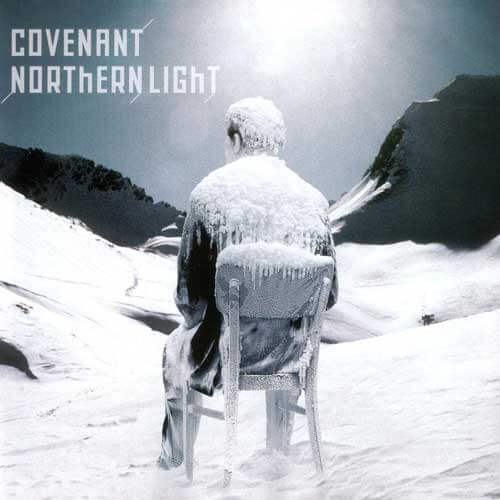
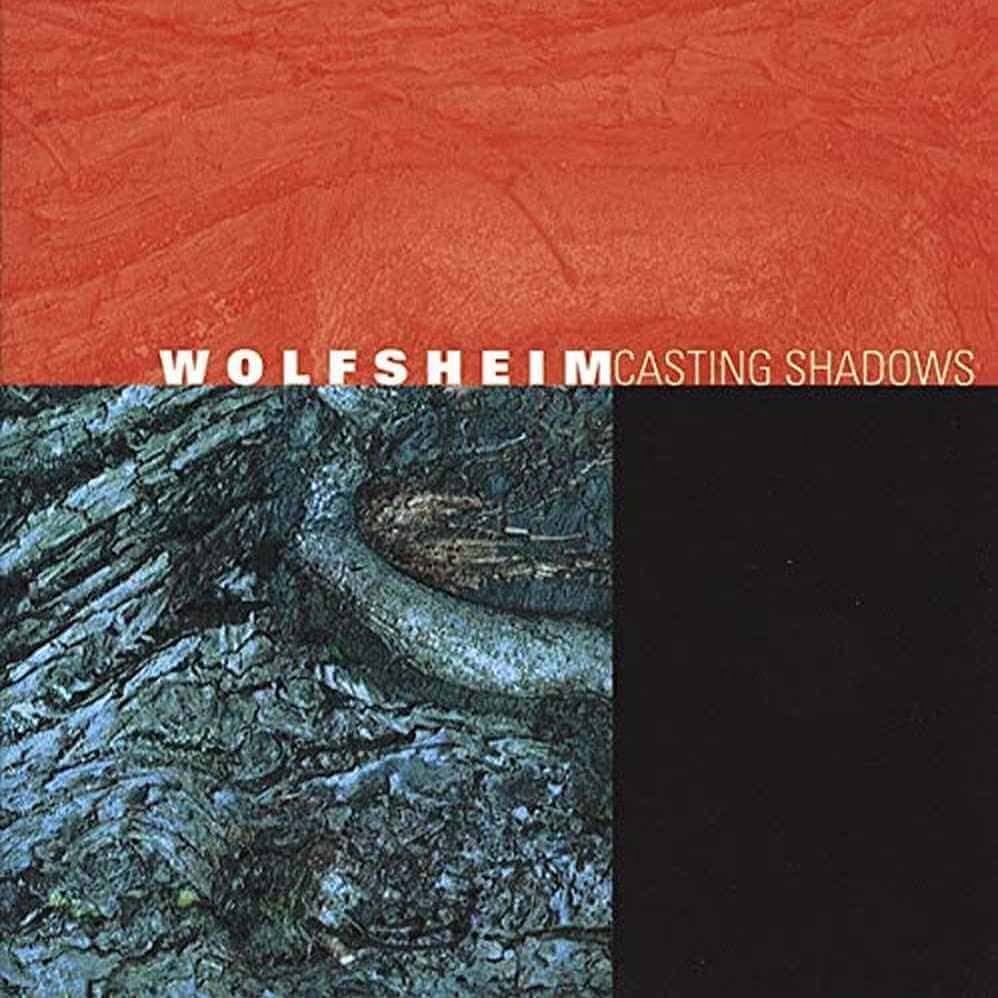
This is the stretch that people who came to the genre later tend to romanticise, and I would gently suggest they weren't there. Mainstream attention was gone. Pet Shop Boys, Erasure and Depeche Mode kept winning, and almost nobody else did. What kept the genre breathing was Germany and Sweden, working almost entirely in the underground: Wolfsheim, De/Vision, Camouflage, Beborn Beton, Mesh, Covenant, Page and Elegant Machinery, mostly on tiny labels, mostly ignored by any publication that mattered. Future pop arrived at the end of the 90s and gave us a dance floor back. Electroclash made a lot of noise in the music press around 2002, but if you were actually in the synth pop scene, it barely touched you. Meanwhile the energy that had left Britain went to Belgium and Germany, into new beat and EBM, a period I wrote about in 'A flashback to New Beat'.
The present
Synthwave builds an entire parallel ecosystem, largely outside the traditional scene and largely without needing it. And the scene itself is in better shape than it has been in thirty years, though you would never know it from the mainstream press. Alienare, Ashbury Heights, Blackbook and Black Nail Cabaret are all making records that would have been career highlights for anyone in 1988, and the festival circuit that supports them is busier every year. No single dominant narrative, no revival to wait for. Just a genre that quietly got on with it.
Women in synth pop
Here is something I got wrong for years and want to correct properly. The standard synth pop history is told almost entirely through men, and it is simply inaccurate.
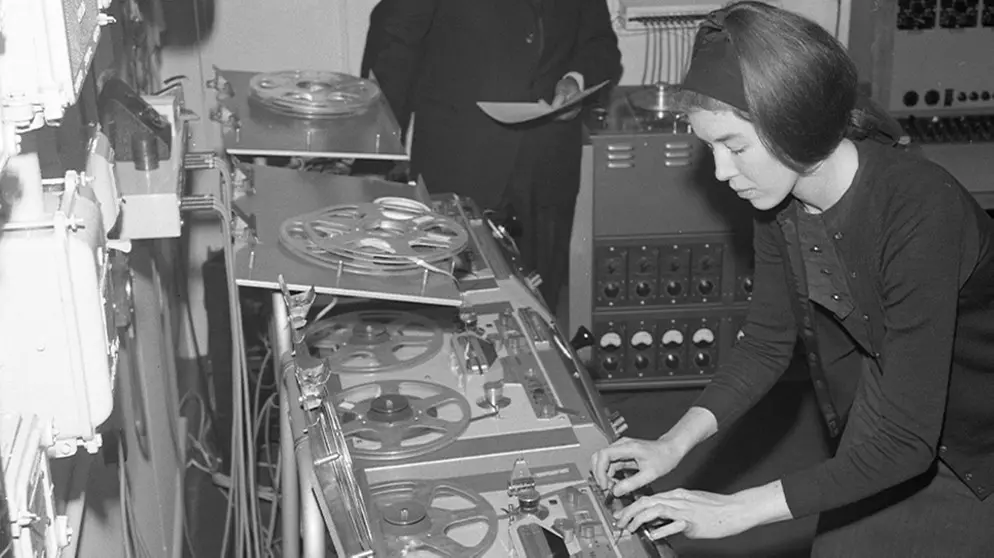
Start before the genre even existed. Delia Derbyshire at the BBC Radiophonic Workshop realised the Doctor Who theme in 1963 by physically cutting and splicing tape, years before commercial synthesizers were a thing. Wendy Carlos made electronic music commercially viable with 'Switched-On Bach' (1968) and then scored 'A Clockwork Orange' and 'The Shining'. Suzanne Ciani built a career on the Buchla. These are foundational figures, not footnotes.
In the genre's classic period, Alison Moyet gave Yazoo the voice that made the machines matter. Annie Lennox turned Eurythmics into the most visually and vocally commanding act of the era. Kim Wilde, Berlin's Terri Nunn, Missing Persons' Dale Bozzio, Clare Grogan with Altered Images, Book of Love and Propaganda's Claudia Brücken all shaped what the decade sounded like. Add the producers and label figures who rarely make the lists at all.
And in the present, women are carrying an enormous share of the scene. Marsheaux, Ladytron, Chvrches, Client, Nina, Sally Shapiro, Boy Harsher, Nyxx, Black Nail Cabaret, Lorelei Dreaming, and Robyn, who has written better melancholy-on-the-dance-floor songs than most bands with the correct haircuts. If your synth pop playlist is all male, you are not listening to the genre. You are listening to about half of it.
Synth pop around the world
Synth pop is usually written about as a British story. Britain got the headlines, but the genre survived because it took root somewhere else entirely.
- Germany: from Kraftwerk and DAF through Propaganda and Alphaville, then the 90s golden run of Camouflage, Wolfsheim, De/Vision, Beborn Beton and And One. Germany didn't have a revival because Germany never stopped.
- Sweden: pound for pound the most productive synth nation on earth. Page, Elegant Machinery, S.P.O.C.K, Covenant, Vision Talk and Emmon, who inject a raw, electronic edge into the sound while remaining a cult concern almost everywhere else.
- Japan: YMO, P‑Model, Hikashu and Plastics developed technopop in parallel with the British scene, not downstream of it.
- USA: slower to start, then substantial. Book of Love, Information Society, Berlin, Cause & Effect, Red Flag and Anything Box, with Metropolis Records later becoming the genre's American home.
- Australia: Real Life, Icehouse and Pseudo Echo in the 80s, Parralox and a steady stream of newer acts since.
- Belgium: More than just fries. Telex got there absurdly early, Absolute Body Control defined the minimal end, and the country went on to invent EBM and new beat.
- Italy: the italo disco boom of the early 80s ran directly alongside synth pop and traded ideas with it constantly, from Gazebo and Righeira to Baltimora. Kirlian Camera then went the other way entirely and have been one of the scene's most uncompromising acts since 1980.
- Greece: a small but disproportionately influential scene around Marsheaux, Fotonovela, Technolorgy and Undo Records.
- France: Kas Product, Marquis de Sade and the cold wave lineage, which has aged remarkably well.

The labels that built the scene
Genres do not survive on talent alone. They survive because somebody presses the records, pays the pressing plant and takes the financial hit when nobody buys them.
- Mute: founded by Daniel Miller to release his own single, ended up home to Depeche Mode, Yazoo, Erasure, Fad Gadget and Nitzer Ebb. Arguably the most consequential independent label in electronic music.
- Some Bizzare: Stevo Pearce's chaotic, brilliant operation that gave early exposure to Soft Cell, Depeche Mode, The The and Blancmange.
- ZTT: Trevor Horn and Paul Morley treating pop as conceptual art with an unlimited studio budget.
- Strange Ways Records: the Hamburg label that gave Wolfsheim their home and shaped a substantial part of what German synth pop sounded like in the 90s.
- Energy Rekords and Memento Materia: the Swedish scene's engine rooms, without which the whole northern European synth revival of the 90s simply does not happen.
- A Different Drum: the American mail-order label and compilation series that, for a lot of people in the late 90s, was the only reliable way to find out that this music still existed.
- October Records: proof that a small, stubborn, genuinely curated roster still beats an algorithm.
- Metropolis, Out of Line, Dependent, Infacted, Conzoom: the labels that kept releasing synth pop through the decades when nobody was watching, and are still doing it.
Famous synth pop cover versions
Some of the genre's most recognisable songs are not its own. Here are four where the synth version comfortably overtook the original in the public memory.
Soft Cell – Tainted Love (1981)
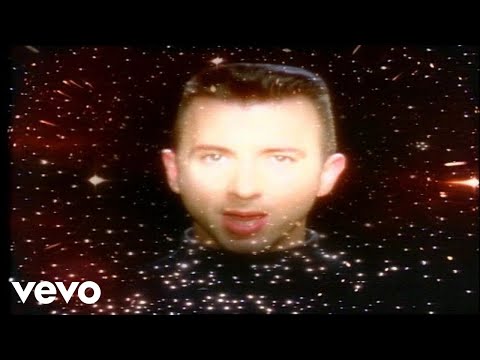
Original by Gloria Jones (1965), a northern soul stomper released as the B‑side of "My Bad Boy's Comin' Home". Soft Cell slowed it down, hollowed it out, and turned a song about heartbreak into a song about exhaustion.
Pet Shop Boys – Always On My Mind (1987)
Best known via Elvis Presley's 1972 recording from the album 'Separate Ways', though Brenda Lee got there first the same year. The Pet Shop Boys recorded it for a television tribute and accidentally produced a Christmas number one.
The Communards – Don't Leave Me This Way (1986)
Written for Harold Melvin & The Blue Notes (1975) and made globally famous by Thelma Houston a year later. The Communards' version became the best-selling UK single of 1986, which is a fairly emphatic way to win an argument about cover versions.
Apoptygma Berzerk – Shine On (2000)
Original by The House of Love from their 1990 self-titled album. Stephan Groth turned an indie guitar song into a future pop anthem, and for a decade you could not attend a club night in Germany without hearing it.
If this is your thing, our page 'We love Synth Pop covers' collects every cover video we have posted, plus the Electrozombies compilations and a dedicated Spotify playlist.
Essential synth pop artists and where to start
Lists like this aren’t the ultimate benchmark, nor are they complete. There would simply be too many to include. Here, I’ve listed albums from every decade that are definitely regarded as milestones within the scene and serve as a good reference point for anyone wanting to get into the world of synth pop.
To get a more complete overview, including a suitable Spotify playlist, check out the article ‘35 essential synth pop songs of all time’.
21 essential synth pop albums over the last 40+ years
Great synth pop documentaries to watch
There are far fewer of these than the genre deserves, which tells you everything about how mainstream media rates our niche. The good ones are very good indeed.
- Synth Britannia, the BBC's 2009 film and still the definitive account of the British story.
- Boy George's 1970s: Save Me From Suburbia, the club culture and the fashion side, from someone who was in the room.
- Before Gary Numan: How Synth-Pop Became Synth-Pop, A documentary that goes back even further in time.
- Depeche Mode: The Dark Progression, This music documentary movie follows the journey of Dave Gahan, Martin Gore, Andy Fletcher, and Vince Clarke as they helped redefine electronic music with groundbreaking albums and iconic songs.
- The Sound of Belgium (2012), essential viewing if you want to understand new beat and EBM.
Why commercial pop with synthesizers isn't synth pop by definition
This is where the arguments start, so let me be precise. A synthesizer is an instrument, not a genre. Nobody calls every record with a guitar on it "rock". Yet the moment a chart single has an arpeggio, someone in a comment section declares it synth pop.
What makes a record synth pop is not the equipment list, it is intent. Synth pop treats electronic sound as the point, as the thing carrying the emotion, and it accepts the commercial cost of doing so. Commercial pop uses synthesizers because they are currently the cheapest and most fashionable way to build a hit, and would drop them tomorrow if the market moved.
That said, the overlap is real and I refuse to be a snob about it. Chvrches are a synth pop band who happen to be popular. The 1975, Lorde and Lady Gaga have all made records that draw directly from this well. Gatekeeping is a hobby for people who have run out of music to listen to.
The distinction is still worth making, though. Not to exclude anyone, but because the word has to mean something or it means nothing.
Is synth pop dead? My honest opinion
No, and I would say that even if I did not have a professional interest in the answer.
What has changed is the shape of it. Synth pop no longer expects to be the biggest thing in the world, and being freed from that expectation has made it healthier. It has a functioning ecosystem. Labels, festivals, magazines that are not owned by big corporations, and an audience that still buys physical formats out of what I can only describe as loyalty.
The development I find most encouraging is a genuine Gen Z audience. Some of them arrived through a television series, which is how 'Running Up That Hill' (1985) by Kate Bush reached number one in the UK in 2022, thirty-seven years after only making number three on release. I keep meeting people in their early twenties who have found 'Enola Gay' or 'Blue Monday' and are asking, in complete sincerity, why nobody makes music like this any more. The answer is that plenty of people do, and they are on Bandcamp with three hundred listeners. Closing that gap is essentially why Electrozombies exists. Here I recommend you to check out our Discover section.
Since I am asked about it constantly, let me be blunt about AI music, it does nothing for me. Not as a threat, as a proposition. A song with nobody behind it is soulless, and for me it lands in the same bin as instrumental music, technically accomplished and emotionally inert. I would not even call it an art form. I know the instrumental part is an unpopular opinion and I have made peace with that. My position is simple. Synth pop is somebody singing a thing they could not otherwise admit out loud, over machines that do not judge them for it. Remove the person and all you have left is the equipment.
What does worry me is the same thing that always worries me. Discovery is now controlled by systems optimised for retention rather than for surprise, and a genre built on strangeness does badly in a machine that rewards the familiar. That is a distribution problem, not a creative one. The music is fine. It has never been easier to make and it has never been harder to find.
Which, honestly, is the most synth pop situation imaginable. The machines work perfectly and the humans are having a difficult time. Forty-five years on, the genre is still describing itself accurately.